
Landex will make a planning application for the demolition of all of the remaining buildings and structures on site and the erection of a series of new commercial buildings. There are no residential units proposed in this development scheme. The commercial units will be designed to mimic /reflect the former use of the site and have a finished appearance with carefully selected materials which gives the appearance of a range of converted former farm buildings grouped around a ‘yard’.
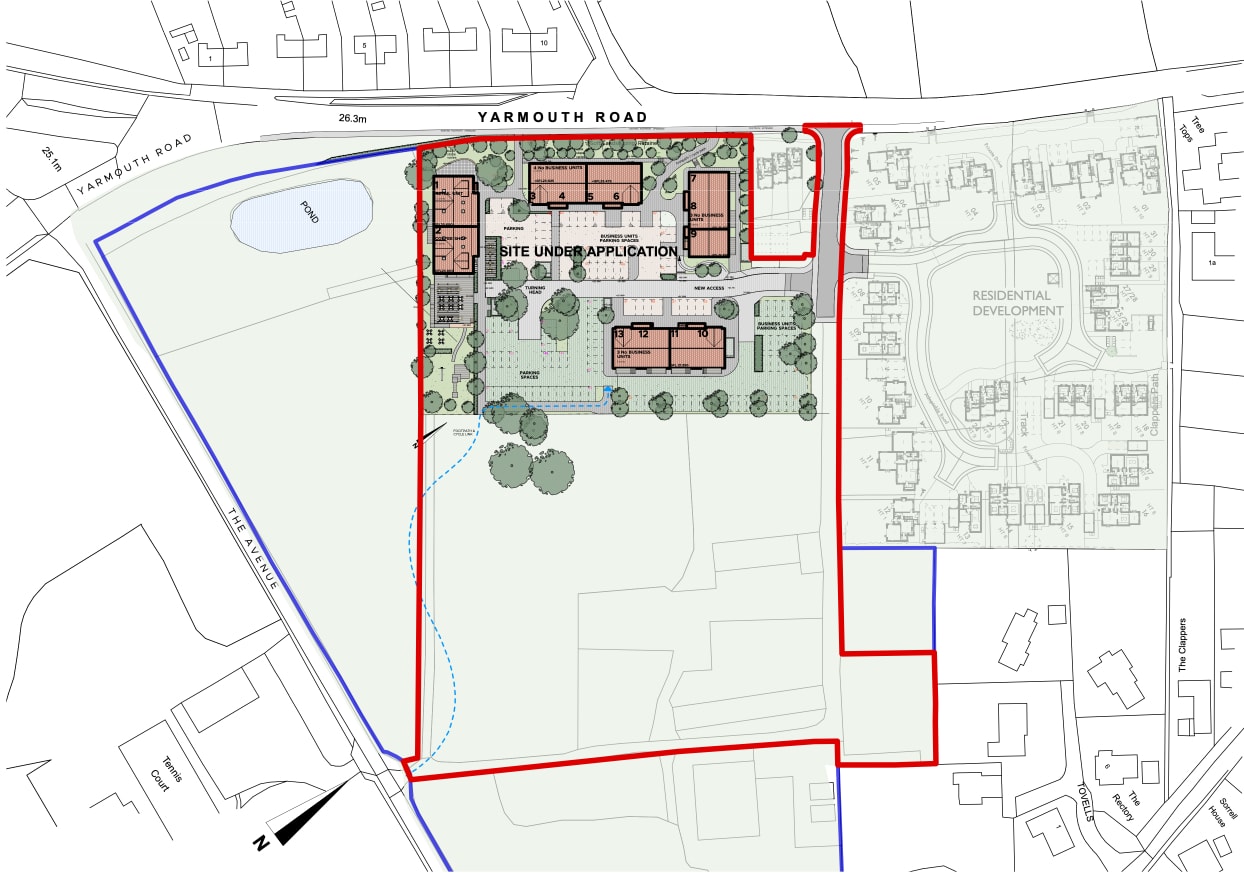
The two main new buildings proposed will be the heart of the scheme with a Café and an adjacent
Shop. These will be positioned within the scheme so that they relate well to the business units sharing a central quadrangle of landscaped public space and parking and cycle facilities but with
footpath/cycle connections to the village and beyond.
There will be a footpath/cycle link provided through the site and the remainder of the former nursery grounds leading to an existing but little used access of The Avenue. This will enable immediate access across the road to the Village Hall, Tennis Court, Play Park, and Recreation Ground.
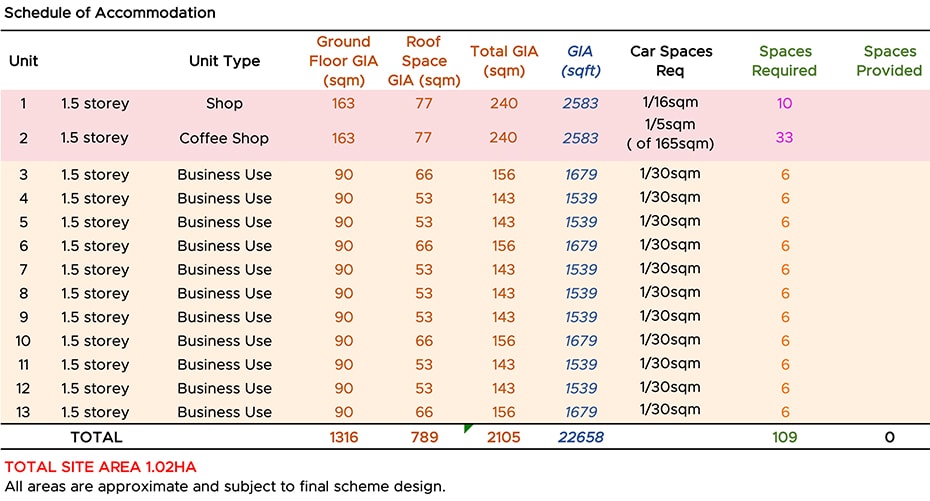
A series of commercial buildings arranged around a landscaped public area at the head of which will be the café and shop. Other commercial units are arranged in a series of three separate blocks with units to provide commercial floor space. These units are self-contained and are capable of linkage to create larger accommodation if required. Car Parking, Electric Vehicle Charging Points, Cycle Racks and footpath connections will all feature in the landscaped layout.
The Café will be accommodated in a purpose designed building combined with external space within the development where the design extends to a sitting out area, so important to the post pandemic period ahead. It will also provide exterior based, small scale play facilities for families. A pedestrian footpath link will give immediate access and connection to a landscaped (flower meadow) to be created from the regeneration of former nursery growing land and where former nursery buildings have been demolished.
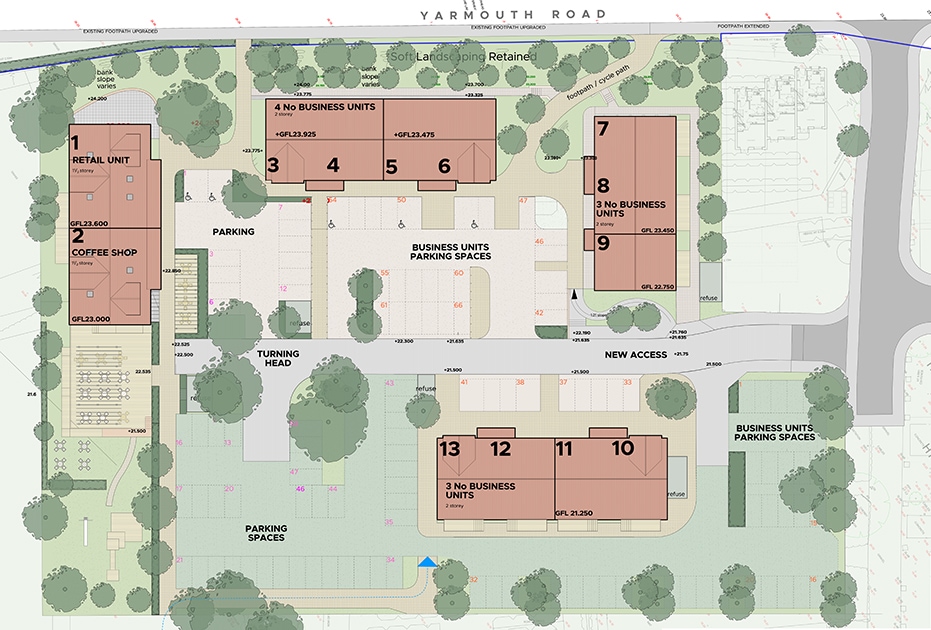
A footpath/cycle link along the High Street will connect the village to the site and then continue through it, on its way to linking up with the Village Hall and recreational facilities off The Avenue.
The Government’s “A Green Future Our 25 year Plan to Improve the Environment” sets a broad commitment to reduce emissions from recorded 1990 levels by 80% by 2050. The Council’s Planning Policy seeks to contribute towards that goal and to address climate change by the application of Planning Policy to manage development. Landex, the applicant, will respond to that policy requirement by delivering a development which is focussed on sustainable construction and biodiversity enhancement.
Landex will achieve this by the use of renewable energy, by sustainable construction methods seeking to achieve the BREEAM – ‘Very Good’ standard or equivalent, by effective Surface Water Management, by encouraging more sustainable forms of transport (electric and low emission vehicles and cycle facilities provision and by conserving and enhancing natural areas within the site. No one of these is more important than the next but biodiversity enhancement through landscaping will feature in this scheme and will help to give it a distinctive appearance and individual character. Setting out at design stage to achieve these targets, Landex’ intention is to protect the quality of the environment but also to create a development scheme which responds to the constraints and opportunities of that environment to produce a distinctive and characterful development which is well designed and a pleasure to use for its occupiers, customers and the local community.
We are developing our surface water drainage strategy for the site and looking to combine effective ‘suds’ features with opportunities to increase and diversify wildlife habitats on site.
Similarly, within new buildings, we are looking to minimise the use of water by occupants of the various business units.
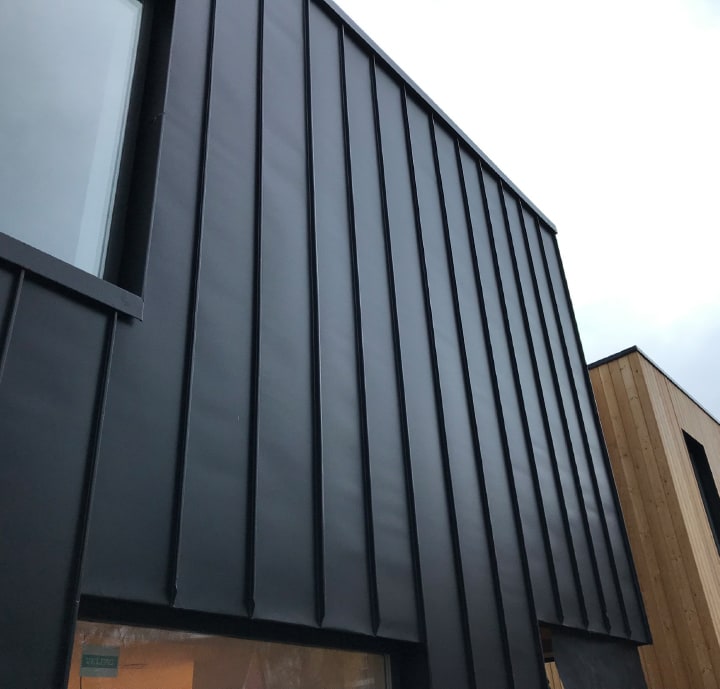
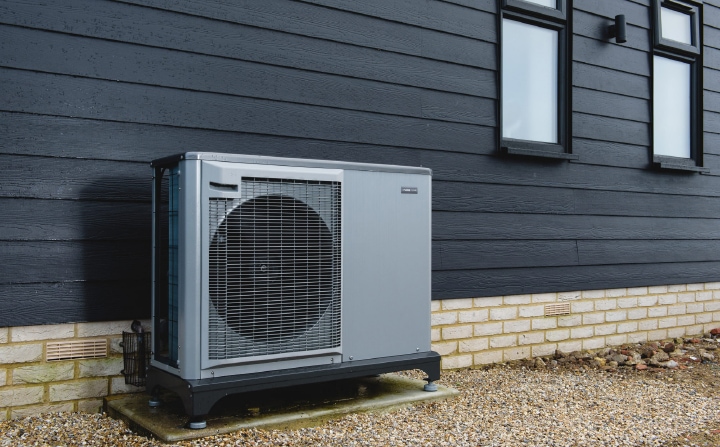 Sustainable construction and renewable energy will be used throughout the development
The site Landscaping will have an emphasis on bio diversity net gain and its design will be led by the constraints and opportunities identified by our Landscape Architect, Giles Hill of the Land and Sculpture Design Partnership and Christian Whiting of MHE Consulting Ltd. Both have provided advice on ecology and biodiversity throughout the planning process for both Phase 1 and Phase 2.
What is planned by way of open spaces for this scheme?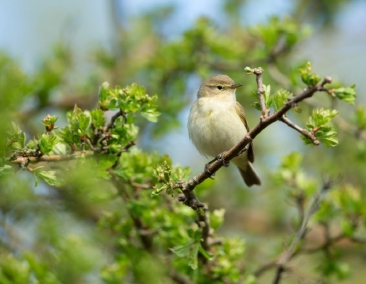
Phase 1 comprised a development with a central open green space in a design which focussed on the landscaped appearance of the finished housing layout.
Phase 2 will step up a gear with a balanced approach seeking to achieve biodiversity net gain with usable spaces in a landscaped setting. Phase 2 proposals will include a detailed landscaped setting for new buildings with nest boxes, native species of trees and hedges, wild flower mixes to attract birds and insects, grassed areas to boundaries, verges and the large open space on site. Landex intends that such spaces and landscaping will be used positively and will ensure an increase in biodiversity and a significant improvement on the low biodiversity value of the former nursey land.
What will be provided in the scheme, particularly with any open space?
This is still to be determined and the consultation with local residents is an important part in that process. Landex is very keen to hear from the residents of Ufford about their aspirations for these spaces – be it ponds or simply as wildflower meadows. The development team will take into account preferences and their brief will be to advise on a landscaping plan which maximises the ecological benefits.
So if people want to see regularly maintained grassed borders and margins for example, we might recommend that it is surrounded by taller grass which can provide a long term home to invertebrates and allow nectar-rich flowers to grow, encouraging bees and birds. Flowering grassed areas can also be established which support a high diversity of flowers, but which can be mown regularly. However, Landex is determined that these spaces are used positively and will ensure an increase in biodiversity.
What else can local people tell us that will help Landex design the right scheme and provide positive benefits?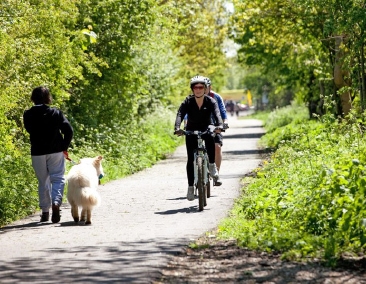
We’d like to know more about how they might use the land. Would those wishing to access the Village Hall, Recreation Ground and the Play Park off The Avenue use the proposed footpath/cycle link through the development and the rest of the site? We also know that people want accessible green spaces close by, so that they can exercise without having to get in the car. But through the consultation process, people can tell us so much more about how they think this can be achieved .
Alternatively, the scheme can deliver something very different but equally beneficial in term of biodiversity. The process is about getting the balance right for both existing and new occupants – amphibians, reptiles, insects, birds and small mammals as well as people!
We can then provide some of the more detailed, technical considerations such as balancing sun and shade, considering the food chain necessary to encourage certain species, providing habitats for invertebrates and safe travel corridors for hedgehogs and others.
And can people help in getting the biodiversity balance right?
Absolutely, some of the best intelligence comes from local people. We’ve already used information from the Suffolk Biodiversity Information Service which incorporates past records from local birdwatching and nature conservation groups. Any monitoring of flora and fauna can help identify very localised needs and help us create the right habitats to let certain species flourish.
If you’ve recently taken part in the Big Garden Birdwatch, Big Butterfly Count, National Glow Worm Survey or other surveys such as those run by the People’s Trust for Endangered Species, please share your results. If you previously saw a bird of prey in Ufford but missed it last year, let us know – because by planting and building with this in mind we can attract species back to the area. We’d be interested to hear from any local naturalist groups as part of the consultation – just email info@landex.co.uk
What more can people do to benefit local biodiversity?
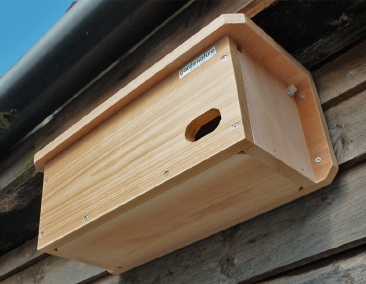
Boxes for birds:
• Right size
• Right materials
• Right Location
There’s so much that can done in every back garden – creating home for wildlife isn’t just about large open spaces or biodiversity gain coming only through development. In fact, a garden can provide a more secure home than an arable field. We are have seen a reduction in many garden bird species in recent decades, but planting certain species, such as hawthorn and other shrubs which provide berries can help rectify this loss. Setting up a nesting box can provide an essential facility for a variety of species but these have to be of a correct design
For those interested in bird and bat boxes, encouraging stag beetles and protecting hedgehogs, we’ve included some guides.
There are numerous websites providing comprehensive advice on building or buying ready made bat and bird boxes.
https://ptes.org/get-involved/wildlife-action/help-stag-beetles/
https://www.honestly-good.co/16-things-to-help-save-hedgehogs/
How will the green areas be manged long term? Will Landex remain involved, or will local people (from the development and within Ufford generally) have a role in managing the green aspects of the development over the longer term?
There are several options to be discussed but again, local people can influence these decisions by responding to the consultation process and letting the team know their views